Finding Empowerment: From Ice to Page
Writing has been practiced since the beginning of time; it has not only shaped history but also allowed humankind to preserve our thoughts over generations. By doing so, we can learn from the past and plan for the future. As a writer, one might get asked why they write or what they plan to do with their passion for writing. This is not only a complex question but will yield a different answer for everyone.
The primary reason I write is to communicate with others and to fulfill my responsibilities as a student, an employee, and, most importantly, as a person. I also enjoy it and find it quite spiritually fulfilling. There is something about being able to channel your thoughts onto paper. Sometimes, I feel as if my thoughts are tangled up inside my head like a jumble of necklaces intertwined with one another. When I am able to write, I feel those tangles slowly unravel as my words fill the page. One thing I like to do is write about decisions before I make them, as it helps me view them from an outsider's perspective rather than keeping them in my head. If I can visualize what has happened and the pros and cons, it makes the decision easier and better, as it is more thought-out.
Writing is also essential for communicating with others in both professional and personal settings. Sometimes it is hard to find the words to express something verbally, but with the skills a writer possesses, it is easier to craft a precise, well-written argument. Verbal conversations are often time sensitive, whereas writing allows you to have the extra time needed to condense your thoughts and make them as precise as possible.
It used to be hard for me to pinpoint what fueled my love for writing, and I had a hard time identifying when I first fell in love with writing. After deep thought and an in-depth examination of my life and what writing means to me, I had to look at a younger version of myself.
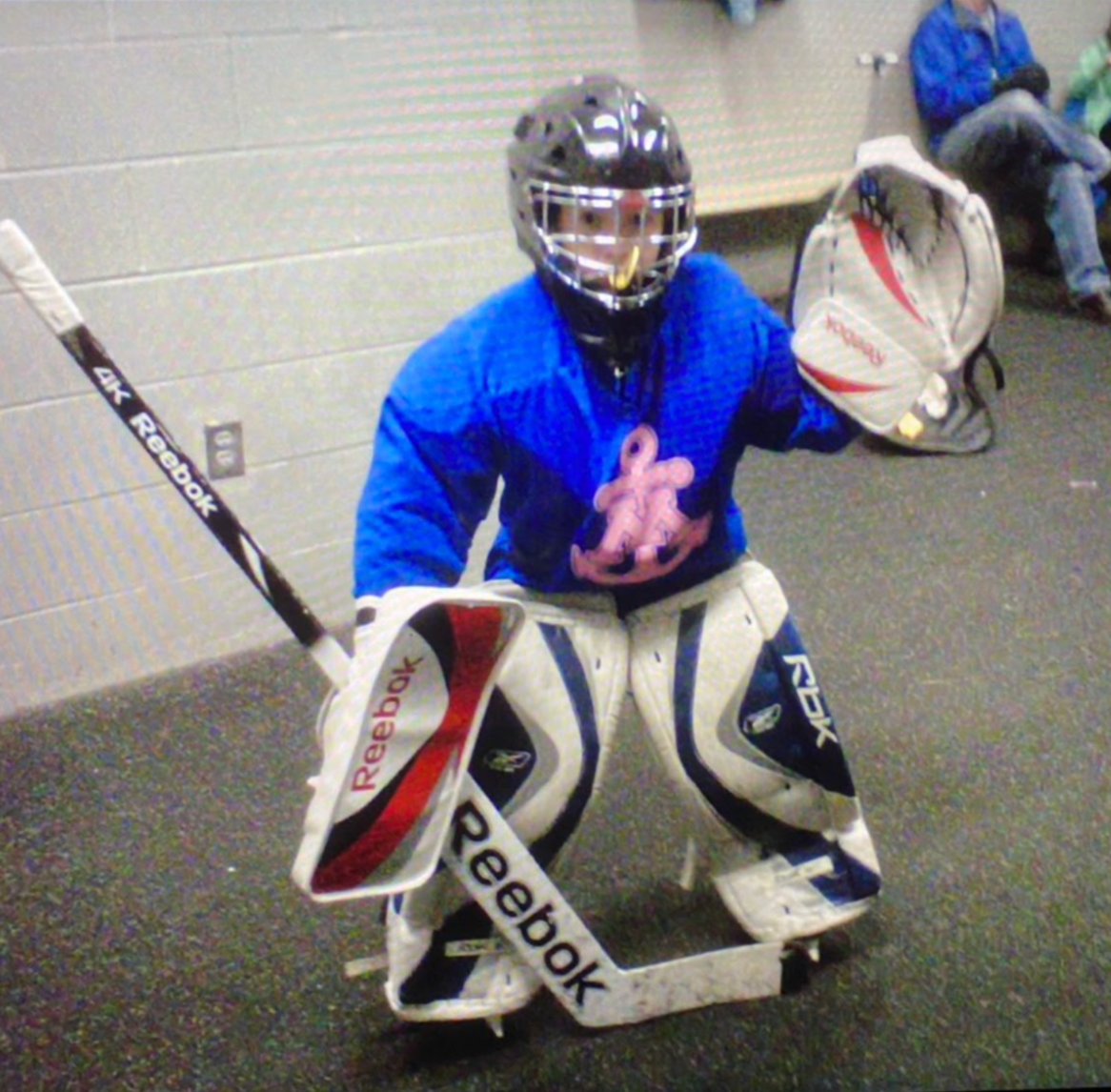
Ever since I was a little girl, I wanted to be the first female NHL goalie in history. My favorite goalie was Niklas Bäckström, who played for the Minnesota Wild for 9 seasons, from 2006 to 2015. I begged my parents to let me play hockey goalie and asked them to sign me up for goalie lessons. I took lessons on and off for almost 10 years, and both boys and men constantly surrounded me. There was a joke that I was the only one who ever used the women’s locker room, which was mostly true.
My coaches would constantly use me as an example to show other boy goalies my age how to do a specific skill or technique. My mom would receive email after email every year, asking me to play for highly selective state teams and to fill in for various boys’ teams. One year, I remember filling in for a boy’s team. I knew many of them since they were in my grade and went to my school. Some of the boys weren’t always kind to me and treated me differently because I am a girl, which was a common experience growing up in the suburbs of Minnesota. Not only was I a girl, but I was also a girl who loved sports, math, and refused to be controlled by society’s predetermined gender roles that were in place. My parents instilled in me the idea that women are just as capable as men from a very young age, which made me feel confident in my interests and abilities, both physical and intellectual.
That boys’ game that I filled in that year was their best game of the season, and I let in zero goals. Other times, I filled in for various boys’ teams. I saved all the future varsity players' shots, and they were humbled around me, to say the least, which always made me feel empowered as a young girl in a male-dominated sport.
Unfortunately, hockey is notorious for head injuries and concussions. I received quite a few, maybe around five, minor concussions playing goalie over the years. I never stopped playing, I always kept going, even if I blacked out after a headshot. On top of that, I had a traumatic brain injury (TBI) when I was around two years old. My parents were always very cautious when it came to me playing contact sports, given my history.
By the time I reached high school, I was incredibly burnt out from hockey and was dealing with some mental health problems. It was sad to see my passion slowly die out after taking a few years to focus on other sports like diving and lacrosse. Unfortunately, I got another TBI during this time at a swim meet, and I was almost paralyzed and was basically out of school for the entire year. After healing, I decided to return to the ice in my senior year of high school since it was just rec hockey.
Despite being “just rec hockey,” the dangers were still there, unfortunately. During my second game, I got a puck to the head. I remember blacking out and trying to keep playing. I didn't explain the severity of my head injury to my parents right away since I did not want to have to give up hockey again. That was a horrible choice. It made my head much worse and caused me to miss a large amount of school again. Eventually, I went to the doctor, and they told me there was no way I could ever play contact sports again.
Hockey was my outlet; it was a place where I could be myself and be appreciated for it. I felt empowered. It was not always easy being the only girl at times, but it made me feel strong and like I was just as capable as boys. I met so many amazing girls, especially other goalies, who were wonderful on and off the ice. Being a girl and a hockey goalie created an alliance between all of us, even if we were on opposing teams. Goalies, like girls, had to stick together.
Sports can be a very beneficial way for people to express themselves and cope with life’s struggles. Not only is this true for me, but they also empower others and foster a sense of community and belonging. According to Streetman and Heinrich, “empowerment describes the process and outcomes of obtaining agency, or the power to understand and control one’s actions despite environmental challenges” (Streetman and Heinrich 805). This definition lays the groundwork for Streetman and Heinrich’s argument and helps the reader better understand empowerment in this context, clearly and definitively. World-renowned and “major international organizations,” such as the International Olympic Committee and the United Nations (UN) General Assembly, “recognize the importance of empowering women through sports participation” (Streetman and Heinrich 804). Not only is this excellent news for all of society, but it is also validating to all the women and girls who fight for the ability to play sports and equal treatment. Streetman and Heinrich further define another important concept, “individual empowerment,” as “how people think about themselves and interact with their environment through interpersonal, interactional, and behavioural constructs” (Streetman and Heinrich 805). Streetman and Heinrich use the term "individual empowerment" to refer to women’s empowerment, depending on the context, but they all use it with the same definition in their arguments. Sports, physical activity, and exercise are similar terms with closely related definitions; all can be viewed through a feminist perspective, particularly one focused on empowerment.
More rigorous sports, such as powerlifting or weight training, tend to lead to a greater sense of empowerment among women than aerobic exercises (Streetman and Heinrich 806), which is perhaps why hockey had a much greater impact on me than gymnastics and diving, despite similar passion and duration. The competitive nature of these particular sports “allows women to challenge gender norms, social norms, and oppressive social structures, thus organically facilitating empowerment” (Streetman and Heinrich 806). Hockey is a highly competitive sport that is both a team and an individual sport; it is also more culturally acceptable for boys to play, so when a girl chooses to play, it challenges problematic societal norms, which is empowering in itself. I felt as if I were a part of a miniature revolution; I was not ready to give that up. Fortunately, in recent years, women's participation in male-dominated sports has grown. “Women commonly describe their participation in male-dominated sports as pushing back on societal norms, breaking boundaries, and obtaining physical and mental strength,” which directly ties to feelings of empowerment (Streetman and Heinrich 805).
After the doctor’s disappointing news, I felt like giving up hockey for good meant giving up that sense of empowerment. I knew I needed to find other ways to feel empowered that did not come from playing contact sports. My passion outside of sports was math; however, after my TBI, it became increasingly hard to continue math at such a high level. I felt stuck, alone, isolated and like all the work I have done over my life was for nothing. All those years spent in the rink and at the kitchen table, listening to my dad explain hyperbolic functions to me, felt useless. As hard as it was to accept finally, I now know they were crucial to my development, and time spent enjoyed is never time wasted.
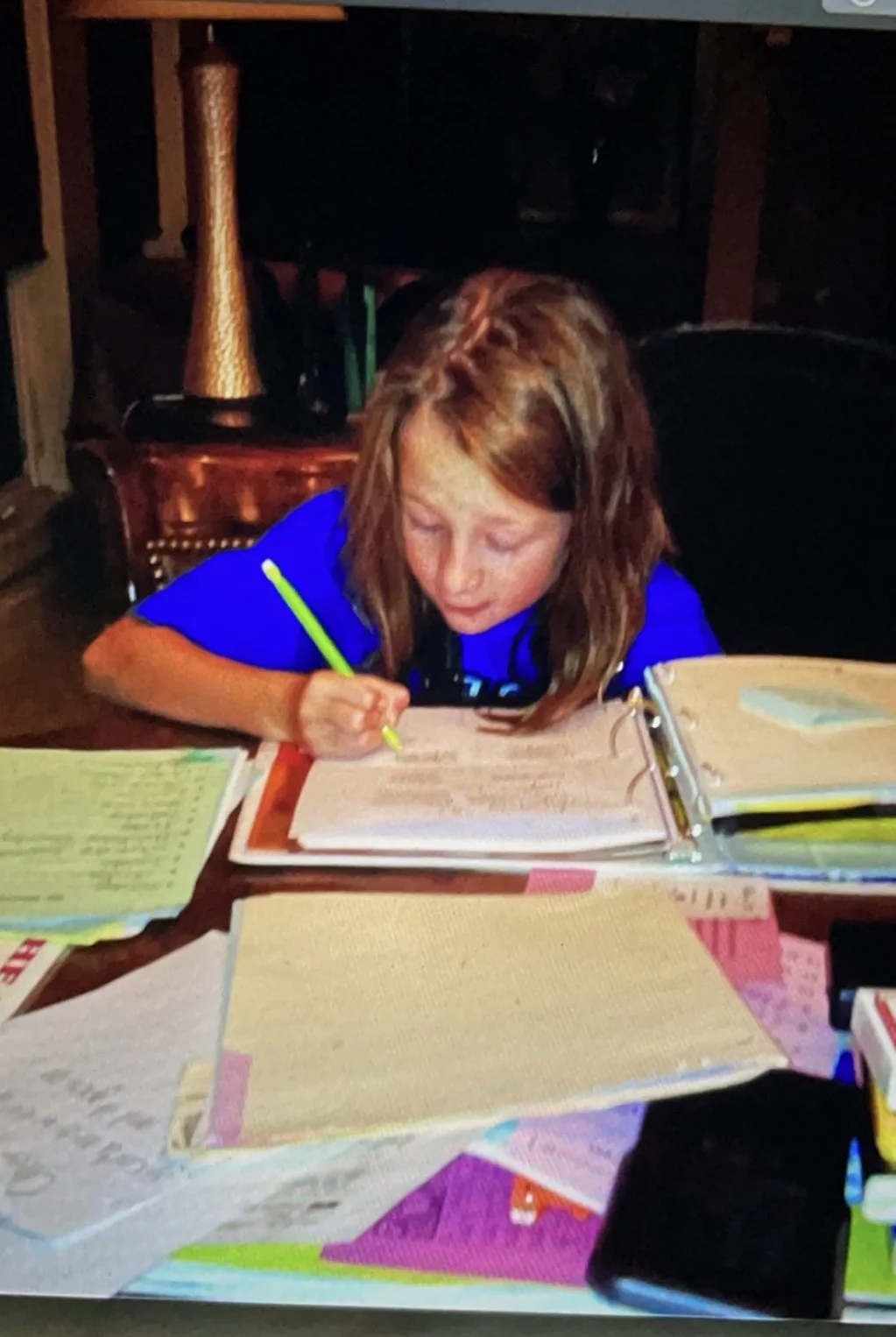
Around this time, I started to spend more time writing and creating art. When I was young, I loved writing stories and being creative. I loved to draw, paint, do arts and crafts, and anything else that let my brain flow freely. When I started to activate this part of my brain again, it didn’t feel natural at first. However, I stuck with it and eventually found a way to express myself that felt good to me and empowered me.
While writing is very different from male-dominated sports like hockey, it can have a similar empowering effect on women. Women writers have “compelled women readers to understand the social reality, her role, her functions and the structures within which she operates,” which has led to these readers being able to identify “the issues, barriers, support system to enable or disable her” place in society regarding men (Mahadev and Patil 96). Women writers are “questioning and challenging the age-old practices” in their work, which has the ability to dismantle harmful practices and norms experienced by other women (Mahadev and Patil 96). There are many ways for women to seek empowerment, it does not always have to be through sports or through appearing “manly”. Through my transition from hockey to writing, I learned that empowerment can come from different places, regardless of how different they may be.
Whether it is through writing or playing hockey, women are enabled “to move from the periphery to the centre stage” (Mahadev and Patil 96–97). Both of these activities reclaim space traditionally dominated by men in their own unique ways, and both are effective. Playing hockey and writing are both great emotional outlets, offering a place to release any sadness, anger, tension, or even excess energy. Both of these activities create a sense of purpose, which is especially crucial for young women who are introverted, shy, unmotivated or depressed. When there is a need to feel empowered as a woman, there is no wrong way to do it as long as it makes sense to you.
After losing my outlet of hockey, the feeling of empowerment I thought was gone was slowly returning, and it was exciting. As I grow as a writer, this feeling of empowerment continues to deepen. I feel like I have found my voice as a feminist writer and have been able to promote the coming together of women in a new, yet equally powerful, way. So that is why I chose to write.
Everyone has different personal or impersonal reasons for writing, as well as different emotions towards writing. People write for various reasons. Some people write with a specific purpose in mind or a goal, whereas others write as a form of self-care or for fun. For myself, I like to do both of those and try to balance them to the best of my ability. Most importantly, I write to feel empowered as a young woman and as a member of society. The feeling of empowerment is priceless; finding ways to seek it is crucial for self-development and self-love.
Works Cited
Mahadev, Rekha, and Umakant S. Patil. “Literature: Women Writing as Means towards Empowerment.” Women Empowerment: A Need of Hour, edited by S. Sivaranjini, Akshita Publishers and Distributors, 2022, pp. 96–98.
Streetman, A. E., and K. M. Heinrich. “Female Empowerment through Sport: An Exploratory Narrative Review.” Sport in Society, vol. 27, no. 5, 2024, pp. 804–819. https://doi.org/10.1080/17430437.2023.2270443.